


PRP Skin Rejuvenation
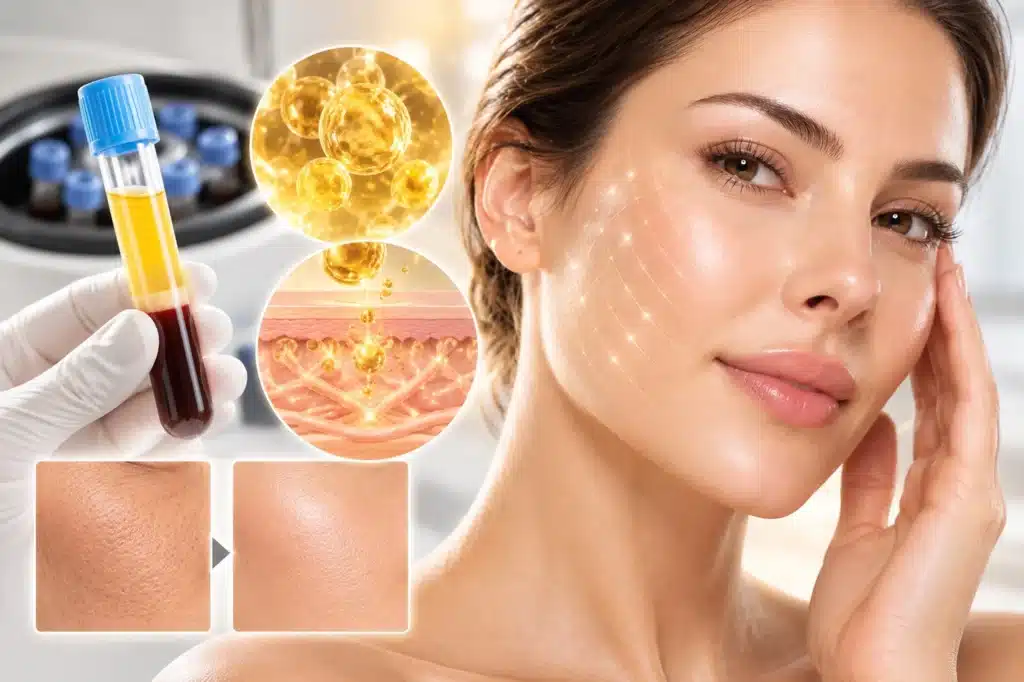
PRP is a biological treatment method performed by injecting platelet-rich plasma obtained from the person's own blood into the target area, aiming to support the body's natural repair and regeneration processes. Applied across many fields from orthopedics to dermatology, and from hair treatment to skin rejuvenation, PRP is frequently preferred in medical aesthetics especially for supporting hair loss and skin quality. At our Kadıköy clinic, PRP applications are planned with a personalized protocol following skin and hair analysis.
What is PRP and How Does It Work?
PRP is the abbreviation of Platelet Rich Plasma in English; its Turkish equivalent is platelet-rich plasma treatment. A small amount of blood taken from the person is separated by centrifugation into plasma rich in platelets and growth factors. This obtained plasma is applied to the treatment area with fine syringes. Growth factors in platelets contain biological signals that support cell renewal, contribute to collagen synthesis, and stimulate tissue repair processes in the applied area. Since it is obtained from the person's own blood, it does not require the use of foreign substances; the possibility of allergic reactions is extremely low. These features make PRP’ one of the frequently preferred biological support methods in both hair and skin applications.Hair PRP Treatment
Hair PRP treatment is a method applied by injecting platelet-rich plasma into the scalp, aiming to support hair follicles. Better response can be obtained when applied in the early stages of hair loss, while hair follicles are still active. Growth factors in the plasma can stimulate hair follicles, contributing to slowing hair loss and strengthening existing hair. In our clinic, hair PRP application is planned as 4 sessions. Hair and scalp analysis is performed before the application; the type and density of hair loss are evaluated to determine a personalized protocol. An anesthetic cream is applied to the scalp during the procedure; most people report only a mild pressure sensation without significant pain. A single session lasts approximately 20–30 minutes.Skin PRP Treatment
Skin PRP treatment, known popularly as vampire facial, is a skin rejuvenation method where platelet-rich plasma is applied to the face, neck, décolletage, or back of the hands. Growth factors in PRP aim to support collagen synthesis, improve skin elasticity, and increase overall skin quality in the application area. Skin PRP can be planned as a supportive application for fine wrinkles and early signs of aging, acne scars and wound scars, uneven skin tone and dullness, moisture loss, and decreased elasticity. It can be combined with Golden Needle (Virtue RF) or mesotherapy applications to deepen the effect. All procedures in Skin PRP’ are performed using plasma obtained from the person’s own blood; no foreign substances are used.Difference Between Hair PRP, Mesotherapy, and Exosome
Three main biological support methods stand out in hair loss: PRP, mesotherapy, and exosome. Each has different mechanisms of action and ideal patient profiles. PRP supports hair follicles with growth factors obtained from the person’s own blood; it is more frequently preferred in the early stages of hair loss when follicles are still active. Mesotherapy involves applying special mixtures containing vitamins, minerals, and amino acids to the scalp; it nourishes the hair and supports stronger growth. Exosome is a support option aiming for stronger biological stimulation of hair follicles through extracellular vesicles. These three applications are complementary protocols addressing hair loss of different severity and stages rather than alternatives; the suitable method or combination is decided after hair analysis and examination.What Should Be Noted After PRP?
After Hair PRP, it is recommended not to wash hair and not to touch the injection area for the first 6–8 hours. Intense exercise, sauna, and steam bath are not recommended for the first 24–48 hours. Avoidance of alcohol consumption is important to prevent possible irritation. After Skin PRP, makeup should not be applied for the first 24 hours, direct exposure to the sun should be avoided, and sunscreen containing SPF should be used. In both applications, mild redness, swelling, or sensitivity at injection points may be observed from a few hours up to a few days; these are expected temporary reactions. If severe or prolonged symptoms develop, contacting our clinic is recommended.Frequently Asked Questions
Does PRP promote hair growth?
PRP aims to support existing hair follicles and slow hair loss; it is not primarily intended to generate new hair from completely lost and non-functional follicles PRP’. When applied in the early stages of hair loss, while follicles are still active, hair density and strengthening improvements may be observed with PRP’. Results vary depending on the type, duration, and intensity of hair loss in the person.Does PRP stop hair loss?
PRP does not eliminate the cause of hair loss; it can contribute to slowing hair loss by supporting hair follicles. Supportive results can be observed especially in androgenetic alopecia (male and female pattern hair loss) and telogen effluvium. Complete cessation of hair loss depends on the underlying cause and the individual's overall health. The type and stage of hair loss are assessed during examination to determine the most suitable treatment plan.How many sessions are needed for PRP hair treatment?
At our clinic, hair PRP treatment is planned in 4 sessions. Sessions are usually applied at intervals of 2–4 weeks. After completing the initial protocol, maintenance sessions may be recommended at certain intervals to preserve the effect. A personalized session plan is determined during the examination.When does PRP show its effect?
The effect of PRP’ generally begins to become evident after 2–3 sessions. Within weeks after the first session, strengthening of hair and reduction in hair loss may be felt; however, completing the protocol is important for noticeable results. Since the hair growth cycle is 3–6 months, full effect assessment requires a few months of process.When can hair be washed after PRP?
After hair PRP, washing with lukewarm water can be done after waiting at least 6–8 hours. For the first 24 hours, it is recommended to avoid hot water, strong shampoos, and hair styling products. Use of hairdryers on hot mode should also be avoided for the first 24 hours.Does PRP cause pain?
Since anesthetic cream is applied to the treatment area before the procedure, most people experience no significant pain except a slight pressure sensation. Sensitivity during PRP’ treatment on the scalp, face, or other areas may vary from person to person; comfort is prioritized throughout the application.When is PRP done after hair transplantation?
After hair transplantation, PRP is generally started 1–3 months post-surgery. It is planned to support the engraftment of transplanted hair follicles and to aid scalp healing. The exact timing is determined with the physician according to the transplantation method and the individual’s healing process.Is PRP necessary after hair transplantation?
PRP is not a mandatory procedure after hair transplantation; however, it is believed to support the rooting process of the transplanted follicles and accelerate healing. Many clinics recommend PRP’ as part of the post-hair transplant recovery protocol. Whether to apply it is decided together during the examination.Is PRP good for white hair?
PRP is not a method that directly targets melanin pigmentation which affects hair color. Therefore, it is not expected to color white hair. However, it can be applied to individuals with white hair to support overall scalp health and nourishment of hair follicles; in this case, the goal is not color but hair quality and density.Does PRP break the fast?
PRP is a procedure where plasma obtained from the person's own blood is reinjected; no food or drink consumption is involved. Therefore, the generally accepted view is that application of PRP does not break the fast. Nevertheless, for a definitive ruling on religious matters, it is recommended to consult the relevant religious authorities.Are there any risks associated with PRP’?
Since PRP is obtained from the person's own blood, it does not require the use of foreign substances; the possibility of allergic reactions is extremely low. As with any injection procedure, redness, sensitivity, swelling, or temporary bruising may occur; these usually resolve quickly. When performed under sterile conditions by an experienced physician, PRP is considered one of the safe methods when applied under appropriate conditions. Evaluation of suitability must be carried out by a physician in the presence of active infection, blood clotting disorders, or certain medication use.What affects the price of PRP?
The price of PRP varies depending on the application area (scalp, face, knee, etc.), number of sessions, the quality of kits and equipment used, and the personalized treatment plan. Due to Ministry of Health regulations, we cannot share exact pricing information; the correct information tailored to your needs is provided after examination along with your personalized treatment plan.
We can plan Skin PRP treatment together to support the overall care of your skin medical skin care If you are looking for similar approaches that support collagen production, Salmon DNA page.
Contact Us
We are here to provide you with the best possible service. Feel free to contact us for more information or to schedule an appointment.