


Carbon Peeling with Pico Laser Technology
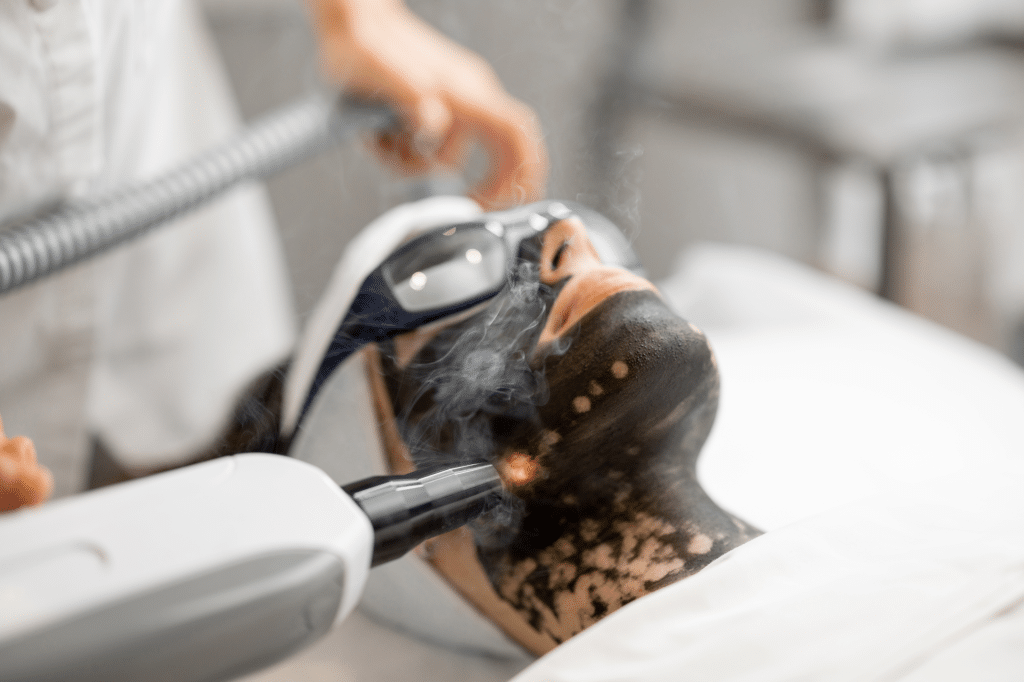
Clean, radiant, and poreless skin no longer requires long-term maintenance programs or aggressive peeling sessions. Pico laser carbon peeling is a quick and effective procedure that provides both deep cleansing and skin rejuvenation in a single session, allowing for continuation of social life without interruption. It has become one of the most frequently preferred applications in our clinic due to its visible results and comfortable process; reviews from carbon peeling clients also emphasize these two features.
How Does Pico Laser Carbon Peeling Work?
Carbon peeling is a skin rejuvenation method based on applying a thin layer of medical active carbon solution on the skin surface, followed by removal using laser energy. Active carbon penetrates deeply into pores, binding dirt, excess oil, dead cells, and toxins. The laser energy applied afterward shatters these carbon particles at a trillionth of a second speed; these micro-explosions both tighten pores and create a controlled peeling effect on the skin's upper layer, stimulating collagen production. In our clinic, we perform this procedure using pico laser technology at a wavelength of 1320 nm. Pico laser's picosecond pulse speed breaks carbon particles into much smaller sizes and minimizes thermal damage to the skin. The result: faster healing, less redness, and a much more comfortable procedure experience.Carbon Peeling with Laser: Difference Between Pico Laser and Q-Switch
Two different laser technologies are used in carbon peeling applications: Q-Switch Nd:YAG and pico laser. Q-Switch is a long-established technology operating at nanosecond speeds; it has been used for years for carbon peeling and delivers effective results. Pico laser performs the same procedure with a pulse duration one thousand times shorter. Practically, this means pigment and carbon particles are broken down into much smaller fragments, the heat generated on the skin is significantly lower, and the recovery process is noticeably faster. For individuals with sensitive skin, those prone to redness or rosacea, and those who do not want to disconnect from social life after the procedure, pico laser carbon peeling is a far more suitable option. Additionally, pico laser’s more precise energy control allows safer application on darker skin tones.Benefits of Pico Laser Carbon Peeling
The benefits of carbon peeling stand out because it addresses multiple skin issues simultaneously. Pore tightening is the most distinctive and quickly felt benefit; visible shrinking of pores occurs after the procedure. It regulates sebum balance in oily and combination skin, controlling excessive oil production that fosters acne formation. Effective results are also achieved on superficial acne scars, fine lines, and uneven skin tones. Furthermore, carbon peeling increases the skin’s overall brightness and vitality; a noticeable glow is observed even after the first session on dull, tired-looking skin. Thanks to collagen stimulation, the long-term quality of the skin improves with regular sessions. The fact that all these benefits can be obtained in a single session without the need for recovery makes this application particularly special.Who Can Undergo Pico Laser Carbon Peeling?
Those bothered by large and visible pores, individuals with oily or combination skin, those experiencing mild acne and acne scars, those seeking to even out skin tone and add radiance, and anyone wishing to rapidly improve overall skin quality can benefit from this application. It can be applied year-round, to all skin types and genders; it is also becoming increasingly preferred among male patients. It is not performed during active acne flare-ups, on skin with open wounds or infections in the treatment area, or during pregnancy and breastfeeding. It is also postponed for those taking photosensitizing medications or with active herpes. Suitability is determined based on skin analysis during the examination.How Is Pico Laser Carbon Peeling Performed?
Before the procedure, the skin is cleansed. Then, a medical active carbon solution is applied evenly in a thin layer on the surface; it is left for a few minutes to allow carbon to penetrate the pores. During the first laser pass, carbon particles are pushed into the pores; in the second pass, pico laser’s picosecond shots explode these particles and remove them from the skin. The entire procedure does not require anesthesia and is completed in an average of 20-30 minutes. Mild redness may appear afterward; this subsides within a few hours. It is possible to return to social life the same day. In our clinic, we generally recommend 4-6 sessions; interval between sessions is 2-4 weeks. Regular sessions result in cumulative improvement and a significant long-term increase in skin quality.Before and After Pico Laser Carbon Peeling
Before carbon peeling, active skin care products such as retinol, AHA, and BHA should be discontinued for at least 3-5 days. Blood-thinning medications and supplements should also be stopped several days prior to the procedure. Application is not done on skin with active sunburn; intense sun exposure should be avoided at least 2 weeks before treatment. After carbon peeling, the face should not be washed, rubbed, or made up for the first 24 hours. Use of sunscreen is mandatory during the post-procedure period; UV exposure both slows healing and increases pigmentation risk. Sauna, hammam, and intense exercise should be postponed for the first 24-48 hours. Adhering to these measures accelerates healing and improves the durability of results.Frequently Asked Questions
What is Pico Laser Carbon Peeling used for?
It cleans and tightens pores, removes excess oil and dead cells, evens out skin tone and adds brightness, reduces mild acne scars, and improves skin quality by stimulating collagen production. The primary reason for the high demand for carbon peeling is its ability to provide all these effects in a single session without requiring any recovery period.Are there any harms of Pico Laser Carbon Peeling?
When applied with the correct indications, by an experienced physician, and with appropriate parameters, carbon peeling is a safe procedure. No serious side effects are expected other than temporary redness and mild sensitivity. If contraindications are ignored or excessive energy is used, risks of pigmentation and skin irritation increase. Pico laser technology further minimizes these risks compared to Q-Switch’e.Can Pico Laser Carbon Peeling be done in summer?
Yes, carbon peeling can be performed at any time of the year. The only additional rule to observe during summer is to limit sun exposure before and after the procedure and to use SPF 50 sunscreen. Since pico laser technology does not directly target melanin, the risk of pigmentation in summer is much lower compared to other laser types; however, it is not applied to skin with active sunburn.How many sessions does Pico Laser Carbon Peeling take to show results?
Immediately after the first session, a noticeable brightness and freshness of the skin can be observed. Pore tightening and oil balance reach visible levels within a few sessions. In our clinic, we generally recommend 4-6 sessions; the effect accumulates as the sessions are completed. The results achieved with maintenance sessions can be sustained long-term.What skin issues does Pico laser carbon peeling effectively address?
Enlarged pores, oily and combination skin, mild acne and blackheads, superficial acne scars, uneven skin tone, dull and lifeless appearance, and the desire to improve overall skin quality are the most suitable indications for carbon peeling. In pigmentation treatment, combining with BBL or a pico laser pigmentation protocol can yield much stronger results.
If you want to support your skin tone and texture with a different light technology, BBL Laser you can explore our page. If you wish to maintain your skin care after peeling, medical skin care you can also take a look at our application.
Contact Us
We are here to provide you with the best possible service. Feel free to contact us for more information or to schedule an appointment.